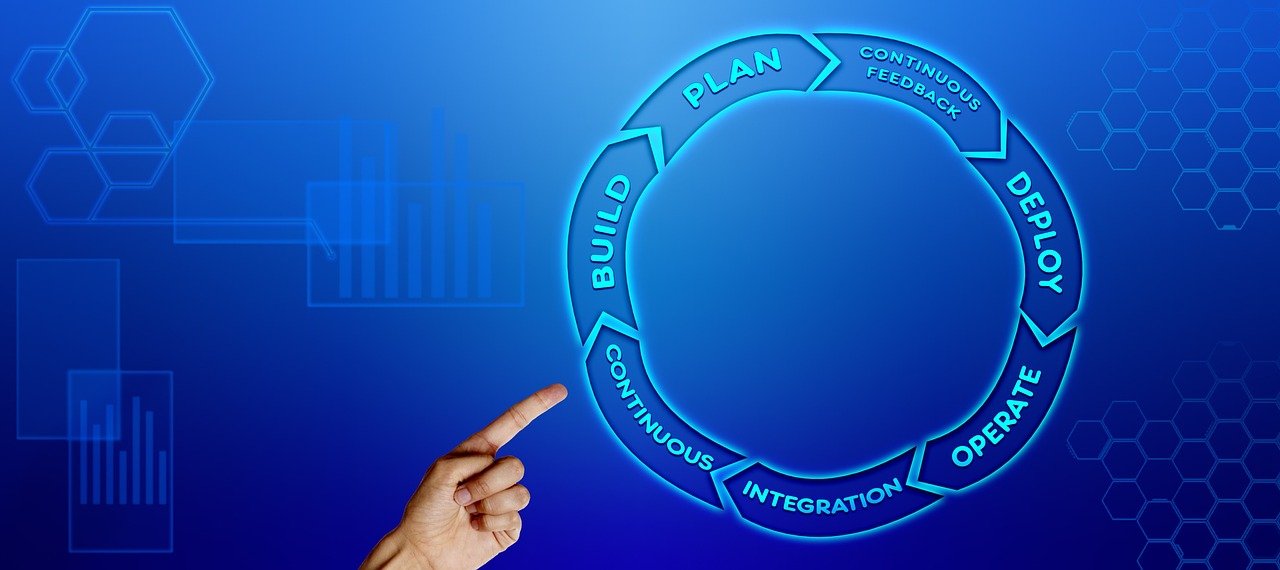
Why DevOps Tooling Has Never Mattered More
Modern software teams live or die by their pipelines — and choosing the best DevOps tools in 2025 and beyond can mean the difference between shipping features in hours versus weeks. According to the 2025 DORA State of DevOps Report, elite-performing teams deploy code 973 times more frequently than low performers, and that gap is almost entirely driven by toolchain maturity. Whether you’re a solo developer setting up your first CI/CD pipeline or an engineering lead evaluating enterprise-grade automation, understanding the DevOps landscape in 2026 is non-negotiable.
DevOps itself has evolved dramatically. What started as a cultural movement bridging development and operations has grown into a sophisticated ecosystem of tools covering continuous integration, continuous delivery, container orchestration, infrastructure as code, monitoring, and security. In 2026, the market for DevOps tools is estimated to exceed $25 billion globally, up from roughly $10 billion in 2021 — a compound annual growth rate that reflects just how seriously organizations are investing in automation and operational efficiency.
This guide cuts through the noise. We’ll cover the most important categories, highlight the standout platforms, and give you practical guidance on how to build a toolchain that actually works for your team.
The Core Categories Every DevOps Toolchain Needs
Before diving into specific tools, it helps to understand the functional layers that make up a modern DevOps toolchain. Each category solves a distinct problem, and the best teams pick best-in-class tools for each layer rather than relying on a single vendor to do everything adequately.
Continuous Integration and Continuous Delivery (CI/CD)
CI/CD is the backbone of any DevOps practice. Continuous integration means automatically building and testing code every time a developer pushes a change. Continuous delivery extends that by automating the deployment pipeline all the way to production — or at least to a staging environment ready for release. Tools in this category include Jenkins, GitHub Actions, GitLab CI/CD, CircleCI, and Harness.
Infrastructure as Code (IaC)
Managing servers and cloud resources by hand is error-prone and doesn’t scale. Infrastructure as code tools like Terraform, Pulumi, and AWS CloudFormation let teams define their infrastructure in version-controlled configuration files, enabling repeatable, auditable deployments. In 2026, Terraform remains the dominant IaC tool in enterprise environments, though Pulumi is gaining ground rapidly among teams that prefer writing infrastructure logic in general-purpose languages like Python or TypeScript.
Containerization and Orchestration
Docker standardized how applications are packaged, and Kubernetes became the de facto standard for running those containers at scale. Container orchestration ensures that your application automatically scales up under load, recovers from failures, and deploys new versions with zero downtime. This layer is now essentially table stakes for any team running microservices.
Monitoring, Observability, and Security
Shipping code fast means nothing if you can’t detect problems quickly. Monitoring tools like Prometheus, Grafana, and Datadog give teams real-time visibility into application health. On the security side, DevSecOps practices integrate tools like Snyk, Trivy, and Checkov directly into pipelines to catch vulnerabilities before they reach production — a category that has seen massive adoption growth in 2025 and 2026.
Jenkins vs. GitHub Actions: The CI/CD Showdown
If you ask most developers to name the best DevOps tools they’ve used, Jenkins and GitHub Actions will appear in almost every conversation. They represent two distinct philosophies — and understanding the difference will save you months of frustration.
Jenkins: The Veteran Workhorse
Jenkins has been around since 2011, and in 2026 it still powers CI/CD pipelines at thousands of large enterprises. Its core strength is flexibility. With over 1,800 plugins available, Jenkins can integrate with virtually any tool, cloud provider, or legacy system in existence. If your organization has unusual requirements — on-premises deployments, custom security controls, multi-cloud pipelines with exotic tooling — Jenkins can almost certainly accommodate them.
The tradeoff is complexity. Jenkins requires you to manage your own infrastructure (or use a managed service like CloudBees), maintain your plugin ecosystem, and write pipelines in Groovy-based Jenkinsfile syntax that has a steep learning curve. Teams that invest in Jenkins often find themselves maintaining the CI/CD system itself as a significant ongoing operational burden.
Best for: Large enterprises with complex, heterogeneous environments; teams with dedicated DevOps engineers; organizations with strict on-premises or air-gapped requirements.
GitHub Actions: The Modern Default
GitHub Actions launched in 2019 and has since become the default CI/CD choice for new projects. Its tight integration with GitHub repositories, YAML-based workflow syntax, and massive marketplace of pre-built actions make it genuinely easy to get started. A basic pipeline that builds, tests, and deploys a Node.js application can be set up in under 30 minutes by someone who has never used CI/CD before.
GitHub Actions uses a runner-based model where workflows execute on GitHub-hosted machines (or your own self-hosted runners). The pricing model is consumption-based — free tier for public repositories, and generous free minutes for private repositories on most paid plans. In 2026, GitHub Actions has over 25,000 actions available in its marketplace, covering everything from cloud deployments to Slack notifications to AI-powered code review.
Best for: Teams already using GitHub; startups and mid-size companies; projects where speed of setup matters; open-source development.
Other Strong CI/CD Contenders
GitLab CI/CD deserves special mention for teams using GitLab as their source control platform. It offers a deeply integrated experience where your repository, CI/CD, container registry, and security scanning all live in one place — reducing the integration overhead that comes with mixing tools from different vendors. CircleCI remains popular for teams that want more configurability than GitHub Actions without the operational overhead of Jenkins. And Harness has emerged as a powerful enterprise option focused specifically on continuous delivery with AI-driven pipeline optimization.
Infrastructure, Containers, and the Cloud-Native Stack
The best DevOps tools don’t operate in isolation — they form an interconnected stack. Once you’ve chosen your CI/CD platform, you need to think carefully about how code actually gets deployed to infrastructure.
Terraform and the IaC Landscape in 2026
HashiCorp’s 2023 license change for Terraform sparked significant community concern and accelerated the development of OpenTofu, an open-source Terraform fork maintained by the Linux Foundation. In 2026, OpenTofu has gained substantial enterprise adoption, particularly among organizations uncomfortable with HashiCorp’s (now IBM-owned) commercial terms. Both tools use the same HCL syntax and are broadly compatible, giving teams optionality without starting from scratch.
For teams deeply invested in AWS, AWS CDK (Cloud Development Kit) has matured significantly and allows infrastructure to be defined in familiar programming languages. Google Cloud’s Deployment Manager and Azure Bicep serve similar roles in their respective ecosystems. The practical advice: use Terraform or OpenTofu if you’re multi-cloud or want the broadest community support; use native IaC tools if you’re locked into a single cloud and want tighter integration.
Kubernetes and Its Ecosystem
Kubernetes (often called K8s) remains the dominant container orchestration platform, but its complexity has spawned a rich ecosystem of tools designed to make it more manageable. Helm is the standard package manager for Kubernetes applications, allowing teams to template and version their deployments. ArgoCD and Flux implement GitOps patterns, where the desired state of your cluster is defined in Git and automatically synchronized by the platform — a practice that dramatically improves auditability and disaster recovery.
For teams that find raw Kubernetes too complex, managed services like Amazon EKS, Google GKE, and Azure AKS abstract away the control plane management. In 2026, the majority of new Kubernetes deployments are on managed services rather than self-hosted clusters, reflecting a broader industry trend toward reducing undifferentiated operational burden.
Docker and Container Security
Docker remains the standard containerization tool, though Podman has gained traction in enterprise Linux environments due to its daemonless, rootless architecture that offers better security characteristics. For container image scanning, Trivy has emerged as the go-to open-source tool, while Snyk and Aqua Security dominate the commercial space. Integrating image scanning directly into your CI/CD pipeline — blocking builds that contain critical vulnerabilities — is now considered standard practice rather than optional.
Monitoring, Observability, and AIOps in 2026
Deploying fast is only valuable if you can detect and respond to problems quickly. The observability space has consolidated significantly, with a few platforms emerging as clear leaders.
The Open-Source Stack: Prometheus and Grafana
For teams that want powerful observability without vendor lock-in, the Prometheus and Grafana combination is the gold standard. Prometheus handles metrics collection and alerting; Grafana provides visualization dashboards. Both are open-source, have enormous communities, and integrate with virtually every infrastructure component. The Grafana ecosystem has expanded to include Loki (log aggregation) and Tempo (distributed tracing), creating a full observability stack under one umbrella.
Commercial Observability Platforms
Datadog remains the leading commercial observability platform in 2026, offering unified metrics, logs, traces, and real-user monitoring in a single product. Its AI-powered anomaly detection and automatic service mapping make it particularly valuable for complex microservices architectures. New Relic and Dynatrace compete closely, with Dynatrace particularly strong in enterprise environments where automated root-cause analysis and AI-driven insights justify the premium pricing.
A significant 2026 trend is the rise of OpenTelemetry as a vendor-neutral standard for instrumentation. By instrumenting your application with OpenTelemetry, you can send telemetry data to any compatible backend — giving you the flexibility to switch commercial vendors without re-instrumenting your codebase. Most major observability vendors now support OpenTelemetry natively, making it the recommended approach for new projects.
AI-Augmented DevOps
Perhaps the most significant shift in the DevOps tooling landscape between 2024 and 2026 has been the integration of AI into core workflows. GitHub Copilot now extends beyond code completion into pull request summarization and automated code review. Tools like Harness use AI to predict deployment risk and recommend rollback thresholds. PagerDuty’s AIOps features automatically correlate alerts and suppress noise during incidents, reducing alert fatigue — one of the most persistent problems in on-call engineering. According to a 2025 survey by Stack Overflow, 76% of professional developers reported using AI-assisted coding tools in their workflow, up from 44% in 2023.
Building Your DevOps Toolchain: Practical Guidance
Knowing which tools exist is only half the battle. The other half is making smart choices about what to adopt and in what order.
Start With the Fundamentals
If you’re building a toolchain from scratch, prioritize in this order: source control (GitHub or GitLab), CI/CD (GitHub Actions is the easiest starting point), containerization (Docker), and basic monitoring. Get these four working well before adding infrastructure-as-code tooling or advanced observability. Premature complexity is one of the most common failure modes for DevOps transformations.
Avoid Tool Sprawl
The DevOps tools market in 2026 is enormous, and it’s tempting to adopt every impressive tool you encounter. Resist this impulse. Each tool you add to your stack is a tool your team needs to learn, maintain, and debug at 2 AM during an incident. A lean, well-understood toolchain consistently outperforms a bloated one full of tools nobody fully understands.
Invest in Documentation and Runbooks
The best DevOps teams treat their pipelines and infrastructure as products — with documentation, onboarding guides, and runbooks. When your deployment pipeline breaks on a Friday afternoon, a well-written runbook transforms a crisis into a routine repair. This cultural investment pays dividends that no tool purchase can replicate.
Evaluate Security Early
DevSecOps — integrating security into every stage of the development pipeline — is no longer optional for most organizations. Evaluate tools like Snyk, Checkov, or Semgrep early in your toolchain design. The cost of fixing a security vulnerability in production is dramatically higher than catching it during a pull request review. Many of these tools offer free tiers that are genuinely useful for smaller teams.
Frequently Asked Questions
What are the most important DevOps tools for beginners in 2026?
For beginners, the most important starting point is a solid CI/CD platform — GitHub Actions is the most approachable option in 2026 due to its tight GitHub integration, YAML-based configuration, and extensive marketplace. Pair it with Docker for containerization and Prometheus plus Grafana for basic monitoring. These three components give you a functional, industry-standard DevOps foundation without overwhelming complexity. Once comfortable, expand into infrastructure-as-code with Terraform or OpenTofu, and container orchestration with Kubernetes via a managed service like AWS EKS or Google GKE.
Is Jenkins still worth learning in 2026?
Yes, but with important context. Jenkins remains widely deployed in large enterprises, and understanding it is valuable if you’re working in — or interviewing for roles at — organizations that have significant existing Jenkins infrastructure. However, for new projects or greenfield environments, GitHub Actions or GitLab CI/CD are generally better choices due to lower operational overhead and faster time-to-value. Learning Jenkins specifically to build new pipelines from scratch is increasingly hard to justify unless you have specific requirements that only Jenkins can meet.
What is the difference between DevOps and DevSecOps?
DevOps is the practice of integrating software development and IT operations to enable faster, more reliable software delivery. DevSecOps extends this by embedding security practices directly into the DevOps pipeline — shifting security left so that vulnerabilities are caught during development rather than after deployment. In practice, DevSecOps means adding security scanning tools like Snyk or Trivy to your CI/CD pipeline, implementing infrastructure security scanning with tools like Checkov, and making security a shared responsibility across development, operations, and security teams rather than a gate at the end of the process.
How does Kubernetes fit into a DevOps toolchain?
Kubernetes serves as the runtime environment where your containerized applications actually run. In a typical DevOps toolchain, your CI/CD pipeline (Jenkins, GitHub Actions, etc.) builds and tests your code, packages it as a Docker container, pushes the container image to a registry, and then deploys it to a Kubernetes cluster. Kubernetes handles the operational complexity of running containers at scale — scheduling workloads across servers, scaling up under load, restarting failed containers, and managing zero-downtime deployments. Tools like Helm, ArgoCD, and Flux make managing Kubernetes deployments more maintainable and auditable over time.
What is GitOps and why is it becoming the standard deployment approach?
GitOps is a deployment methodology where the desired state of your infrastructure and applications is defined entirely in Git repositories, and automated tooling continuously reconciles the actual running state to match that desired state. Tools like ArgoCD and Flux implement GitOps for Kubernetes environments. The appeal is significant: every change is version-controlled and auditable, rollbacks are as simple as reverting a Git commit, and there’s a single source of truth for what should be running in your environment. In 2026, GitOps has moved from emerging practice to mainstream recommendation for teams running Kubernetes at any meaningful scale.
How should small teams approach DevOps tooling without dedicated DevOps engineers?
Small teams should prioritize managed services and tools that minimize operational overhead. GitHub Actions eliminates the need to manage CI/CD infrastructure. Managed Kubernetes services (EKS, GKE, AKS) remove the complexity of running your own control plane. Cloud-native monitoring services or the free tier of tools like Datadog can get you solid observability without a dedicated engineer. The key principle is avoiding tools that require full-time maintenance just to keep running. For most small teams, a simple GitHub Actions pipeline deploying to a managed container service like AWS ECS or Google Cloud Run will outperform a complex Kubernetes setup that nobody has time to manage properly.
What role is AI playing in DevOps tooling in 2026?
AI has become genuinely integrated into DevOps workflows rather than remaining a marketing buzzword. GitHub Copilot assists with writing pipeline configuration and infrastructure code. AI-powered features in tools like Harness predict deployment risk based on historical data. Observability platforms including Datadog and Dynatrace use machine learning to automatically detect anomalies, correlate incidents, and surface likely root causes — dramatically reducing mean time to resolution. AIOps platforms are helping on-call engineers manage alert fatigue by intelligently grouping related alerts during incidents. The most practical advice: adopt AI features in tools you already use rather than adding dedicated AI tools — the integration benefits outweigh the novelty of standalone AI DevOps products.
The DevOps tooling landscape in 2026 is mature, competitive, and genuinely impressive in what it enables teams to accomplish. From the best DevOps tools like GitHub Actions and Jenkins powering CI/CD pipelines, to Terraform managing cloud infrastructure, to Kubernetes orchestrating containerized applications at scale, the modern DevOps stack gives even small teams capabilities that would have required entire operations departments a decade ago. The key is building deliberately — starting with fundamentals, avoiding unnecessary complexity, integrating security early, and treating your toolchain as a living system that evolves with your team’s needs. The teams that win aren’t necessarily those with the most sophisticated tools; they’re the ones who deeply understand and effectively operate the tools they’ve chosen.
Disclaimer: This article is for informational purposes only. Always verify technical information and consult relevant professionals for specific advice regarding your organization’s DevOps strategy, security requirements, and technology decisions.
Leave a Reply