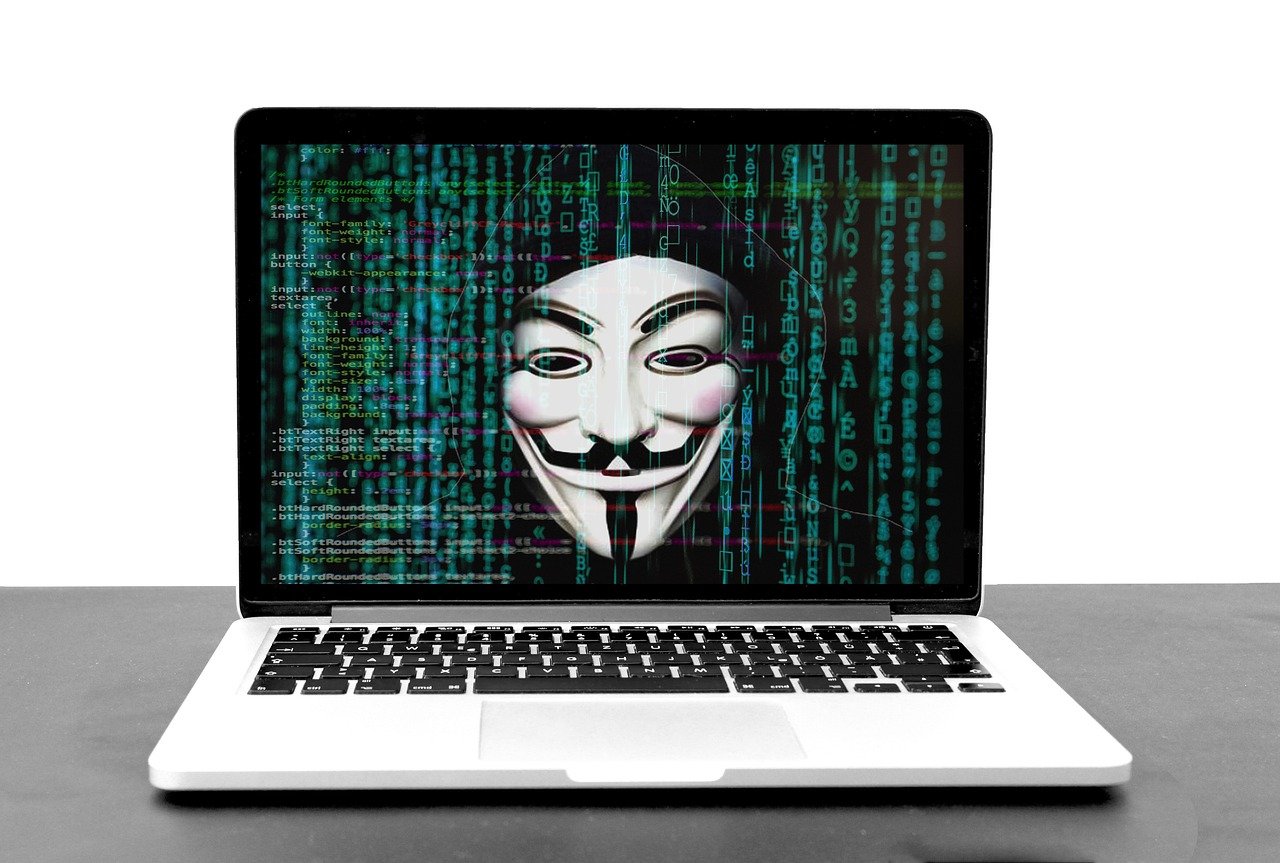
The Hidden Threat You Can’t Firewall Away
Social engineering attacks exploit human psychology rather than software vulnerabilities, making them the most dangerous and fastest-growing cybersecurity threat facing individuals and organizations in 2026. Unlike brute-force hacking, these attacks don’t need sophisticated code — they need only a convincing story and a moment of human trust. According to the 2025 Verizon Data Breach Investigations Report, over 74% of all data breaches involve a human element, with social engineering as the dominant attack vector. Understanding how these manipulations work is no longer optional — it’s a survival skill for anyone living or working in a connected world.
Whether you’re a business owner in Chicago, a remote worker in Manchester, or a student in Sydney, hackers are actively crafting schemes designed specifically to bypass your defenses. The alarming part? Most victims never see it coming. Let’s break down exactly how these attacks work, what forms they take, and — most importantly — how to protect yourself and your organization.
The Psychology Behind the Attack
Social engineering succeeds because it targets predictable human behaviors. Hackers don’t need to crack encryption when they can simply trick someone into handing over access credentials. These attacks are built on well-documented psychological principles that cybercriminals have weaponized with remarkable precision.
The Six Levers Hackers Pull
Robert Cialdini’s classic principles of influence — authority, urgency, social proof, scarcity, reciprocity, and liking — serve as a practical playbook for attackers. A phishing email claiming to be from your CEO (authority) demanding immediate action to prevent account suspension (urgency and scarcity) is a textbook example of stacking multiple psychological triggers in a single message.
- Authority: Impersonating executives, IT departments, banks, or government agencies to command compliance
- Urgency and Fear: Creating artificial time pressure — “Your account will be closed in 24 hours” — to bypass rational thinking
- Reciprocity: Offering something small (a free gift, a helpful PDF) to create a sense of obligation
- Social Proof: Claiming “other employees have already verified their accounts” to normalize the request
- Familiarity: Using personal details gathered from LinkedIn, social media, or previous data breaches to appear trustworthy
Why Even Smart People Fall for It
High cognitive load is one of the most exploitable human conditions. When people are busy, stressed, or multitasking — conditions that define most modern workplaces — the brain defaults to fast, intuitive thinking rather than slow, analytical reasoning. Hackers deliberately time their attacks around high-pressure moments. Phishing emails sent on Monday mornings or late Friday afternoons show significantly higher click-through rates, according to cybersecurity firm Proofpoint’s 2025 State of the Phish report.
Even more concerning, attackers now use AI-generated voice cloning and deepfake video technology to impersonate real people with uncanny accuracy. This represents a major evolution in social engineering attacks — one that removes the last reliable defense many people thought they had: recognizing a familiar voice or face.
The Most Dangerous Types of Social Engineering Attacks
Social engineering is an umbrella term covering dozens of specific techniques. Knowing the most common attack types dramatically improves your ability to recognize and resist them.
Phishing, Spear Phishing, and Whaling
Phishing remains the most prolific social engineering attack in 2026. Standard phishing casts a wide net — mass emails mimicking trusted brands like Microsoft, PayPal, or Amazon. Spear phishing is the precision version: attackers research a specific individual and craft a highly personalized message using real names, job titles, recent projects, and even writing styles harvested from social media. Whaling takes this a step further by targeting C-suite executives specifically, where a single successful attack can yield millions of dollars or complete network access.
The FBI’s Internet Crime Complaint Center (IC3) reported that Business Email Compromise (BEC) — a form of spear phishing — caused over $2.9 billion in losses in 2024 alone, making it the most financially damaging cybercrime category for the fifth consecutive year.
Vishing and Smishing
Voice phishing (vishing) uses phone calls to extract sensitive information. In its modern form, this frequently involves AI voice cloning — a criminal synthesizes a trusted person’s voice using audio scraped from public videos or meetings and then calls employees with urgent requests. Smishing (SMS phishing) exploits the higher open rates of text messages compared to email. Most people read a text within three minutes of receiving it, making smishing attacks particularly time-sensitive and effective.
Pretexting and Impersonation
Pretexting involves creating an elaborate fabricated scenario — a pretext — to manipulate a target. A common example: someone calls your company’s IT helpdesk claiming to be a new remote employee locked out of their account. They’ve done enough research to sound plausible, create urgency, and eventually talk their way into having their password reset. The 2024 MGM Resorts breach, which cost the company over $100 million, began with exactly this kind of phone-based social engineering attack against an IT helpdesk employee.
Baiting and Quid Pro Quo Attacks
Baiting exploits curiosity or greed. The classic physical version involves leaving infected USB drives in company parking lots — studies show employees plug in found USB drives at rates exceeding 45%. The digital version uses promises of free software, music, movies, or exclusive content to lure targets into downloading malware. Quid pro quo attacks offer a service in exchange for information — for example, posing as IT support and offering to fix a technical problem in return for login credentials.
Tailgating and Physical Social Engineering
Not all social engineering happens online. Tailgating — physically following an authorized person into a restricted area — remains a serious threat for businesses with sensitive premises. Attackers may pose as delivery drivers, maintenance workers, or new employees. This type of attack is particularly effective because most people feel socially awkward challenging someone who appears to belong.
How Hackers Research Their Targets
The preparation phase of a social engineering attack can be just as sophisticated as the attack itself. Modern attackers use a combination of open-source intelligence (OSINT) tools, data from previous breaches, and AI-powered profiling to build detailed dossiers on their targets before making first contact.
OSINT and Social Media Harvesting
LinkedIn is a goldmine for attackers researching corporate targets. Job titles, reporting structures, current projects, work anniversaries, and even recent promotions are freely available — all information that makes a spear phishing email or pretexting call dramatically more convincing. Facebook, Instagram, and Twitter/X reveal personal details like family members’ names, pet names (frequently used in passwords), travel schedules, and emotional states that can be exploited.
Dark Web Data and Breach Databases
Billions of usernames, passwords, and personal details from past data breaches are available on dark web marketplaces for mere cents per record. Attackers use this data to attempt credential stuffing (trying leaked passwords on new sites) and to personalize their social engineering scripts. If a hacker knows your old password, mentioning it in a message immediately creates a sense of exposure and urgency that can override rational thinking.
AI-Powered Reconnaissance
In 2026, generative AI tools — some specifically designed for malicious use — can analyze a target’s writing style from emails, social media posts, or public documents and generate perfectly mimicked messages. This represents a quantum leap in attack sophistication. Gone are the days of obviously broken-English phishing emails. Today’s AI-generated phishing content is grammatically flawless, contextually appropriate, and deeply personalized.
Protecting Yourself and Your Organization
The good news is that understanding social engineering attacks gives you a significant defensive advantage. These attacks rely on exploiting surprise, urgency, and ignorance — eliminate those conditions and the attack loses most of its power.
Build a Culture of Healthy Skepticism
The single most effective defense against social engineering is cultivating a workplace — and personal — culture where it is not only acceptable but encouraged to verify requests before acting on them. Any request involving money transfers, credential sharing, access changes, or sensitive data should trigger a mandatory verification step using a separate, pre-established communication channel. Call back on a known phone number. Walk to someone’s desk. Use an internal messaging system — not a reply to the suspicious email itself.
Implement Multi-Factor Authentication Everywhere
Multi-factor authentication (MFA) is not foolproof — attackers can use MFA fatigue attacks, bombarding a user with authentication requests until they approve one out of frustration — but it still significantly raises the cost and complexity of any attack. Prefer hardware security keys (like YubiKeys) or authenticator apps over SMS-based MFA, which is vulnerable to SIM swapping attacks. In 2026, passkeys are increasingly replacing passwords entirely, offering a more phishing-resistant authentication method.
Regular Security Awareness Training
One-time security training doesn’t work. Research from the SANS Institute shows that human vulnerability to phishing attacks decreases significantly with regular simulated phishing exercises — but only when combined with immediate, constructive feedback rather than punishment. Organizations should run simulated social engineering attacks quarterly and train employees specifically on the techniques described in this article. The goal is pattern recognition, not paranoia.
Verify Identity Through Secondary Channels
Establish clear organizational protocols for identity verification. If someone calls claiming to be from IT, hang up and call IT directly using a number from the official internal directory — not a number the caller provides. For financial requests, implement dual-authorization requirements where two separate individuals must approve any transfer above a defined threshold. This simple procedural control has prevented thousands of BEC attacks.
Limit Your Digital Footprint
Audit your social media privacy settings regularly. Restrict public visibility of professional information on LinkedIn to what is genuinely necessary. Use unique email addresses for different services so that a breach of one doesn’t expose your primary contact. Services like HaveIBeenPwned.com allow you to check whether your email address appears in known data breaches — check it regularly and change compromised passwords immediately.
Technical Controls That Support Human Defenses
While this article focuses on the human dimension, technical controls remain essential layers in a comprehensive defense. Email filtering with DMARC, DKIM, and SPF records significantly reduces spoofed emails reaching inboxes. Advanced endpoint detection and response (EDR) tools can catch malware delivered through social engineering even if a user clicks a malicious link. Zero-trust network architecture — which assumes no user or device is inherently trusted — limits the damage when credentials are compromised.
The Evolving Threat Landscape in 2026
Social engineering attacks are not standing still. Three major trends are reshaping the threat environment and demand particular attention from anyone serious about cybersecurity.
AI-Generated Deepfakes: Video and audio deepfakes have crossed the threshold of real-world effectiveness. In 2024, a finance worker at a multinational firm was tricked into transferring $25 million after attending what appeared to be a video conference with her CFO and colleagues — all of whom were deepfakes. This type of attack will become more common and more convincing throughout 2026.
Hybrid Attacks Combining Technical and Social Vectors: Modern attacks rarely rely on a single technique. A common pattern involves using a social engineering lure to deliver malware, which then harvests credentials used in a technical network intrusion. Defending against these hybrid attacks requires equally integrated security strategies — human awareness training cannot exist in isolation from technical security measures.
Targeting of Personal Devices: As remote and hybrid work remains standard across the US, UK, Canada, Australia, and New Zealand, attackers increasingly target personal smartphones and home networks as entry points into corporate systems. The line between personal and professional cybersecurity has effectively dissolved, meaning individual digital hygiene now has enterprise-level consequences.
Frequently Asked Questions About Social Engineering Attacks
What is the most common type of social engineering attack in 2026?
Phishing — particularly spear phishing and AI-enhanced phishing — remains the most prevalent form of social engineering attack in 2026. Business Email Compromise, a sophisticated form of spear phishing targeting financial transactions, continues to be the most financially damaging variant, costing organizations billions of dollars annually according to FBI IC3 data.
Can social engineering attacks happen in person, not just online?
Absolutely. Physical social engineering attacks like tailgating, impersonation of service workers, and pretexting via phone calls are well-documented and frequently used in combination with digital attacks. High-security facilities remain vulnerable to in-person social engineering because human politeness and social discomfort make people reluctant to challenge strangers who appear to belong.
How can I tell if an email is a phishing attempt?
Look for mismatched sender email addresses (the display name may say “Microsoft Support” but the actual address is a random domain), unexpected urgency, requests to click links or download attachments, and any request for credentials or financial information. Hover over links before clicking to preview the actual URL. When in doubt, navigate directly to the organization’s official website rather than using any link in the email. Remember that AI-generated phishing in 2026 may be grammatically perfect, so do not rely on spelling errors as your primary indicator.
What should I do if I think I’ve been targeted by a social engineering attack?
Stop all interaction with the suspected attacker immediately. Do not provide any additional information. If you believe you’ve already shared credentials, change those passwords immediately and enable MFA on affected accounts. Report the incident to your organization’s IT security team if it involves work systems. For personal accounts, report phishing attempts to your email provider and relevant authorities — the FTC in the US (ReportFraud.ftc.gov), Action Fraud in the UK, or the ACSC in Australia.
Is multi-factor authentication enough to stop social engineering attacks?
MFA is a critical control but not a complete solution. Attackers have developed countermeasures including MFA fatigue attacks, real-time phishing proxies that capture and relay MFA codes, and SIM swapping to intercept SMS codes. Hardware security keys and passkeys offer stronger protection than SMS or push-notification MFA. Think of MFA as one essential layer in a defense-in-depth strategy, not a standalone solution.
How do hackers use AI to make social engineering attacks more effective?
In 2026, attackers use AI in multiple ways: generating personalized phishing emails that mimic writing styles of real colleagues, creating voice clones from publicly available audio to conduct convincing vishing calls, producing deepfake video for impersonation in virtual meetings, and automating large-scale OSINT reconnaissance to identify high-value targets and gather exploitable personal details. AI has dramatically lowered the skill threshold required to conduct convincing social engineering attacks while simultaneously increasing their sophistication and scale.
What industries are most targeted by social engineering attacks?
Financial services, healthcare, and technology sectors are consistently the most targeted industries due to the value of their data and the financial assets they control. However, no industry is immune. Small and medium-sized businesses across all sectors are frequently targeted precisely because they often lack the security resources of large enterprises while still holding valuable customer data and financial accounts. Government and education sectors have also seen sharply increased targeting in recent years.
Social engineering attacks will continue to evolve as long as humans remain part of the security equation — which is to say, forever. The answer is not to become paranoid or to distrust everyone, but to develop a calibrated skepticism: one that automatically applies verification steps to high-stakes requests while preserving the collaborative trust that makes organizations function. Cybersecurity is ultimately a people problem, and people — properly trained, well-supported, and equipped with the right tools — are also the most powerful defense. The organizations and individuals who thrive in 2026’s threat environment will be those who treat security awareness not as an annual checkbox but as an ongoing, living practice embedded in how they work and communicate every day.
Disclaimer: This article is for informational purposes only. Always verify technical information and consult relevant cybersecurity professionals for specific advice tailored to your organization’s or personal situation.
Leave a Reply